Flower Identifier
Upload a flower photo for a careful visual identification, the visible traits behind it, likely lookalikes, and the one next view that can improve the result.
- Free to use with no account or app installation.
- One clear bloom starts the process. Extra views help resolve close matches.
- Pet-safety facts stay separate from visual guesses and require cited records.
Identify a flower
Free in your browserHow Flower Identifier works
A useful identification is more than a plant name. The tool starts with what your image visibly shows, offers only a short candidate list, names the missing trait when the photo is not enough, and asks for one focused next view.
- 01
Start with one clear bloom
Fill the frame with an open flower head in even light. One clear bloom gives the tool a sensible place to begin.
- 02
Inspect visible structure
Bloom form, centre shape, leaf attachment, stem, and plant habit carry more identifying weight than colour alone.
- 03
Compare plausible lookalikes
A close match stays a candidate until the feature that separates it from a lookalike is visible.
- 04
Request the best next view
A side profile, leaf node, or whole-plant image often answers the exact question the first photo could not.
What makes a flower photo easier to identify?
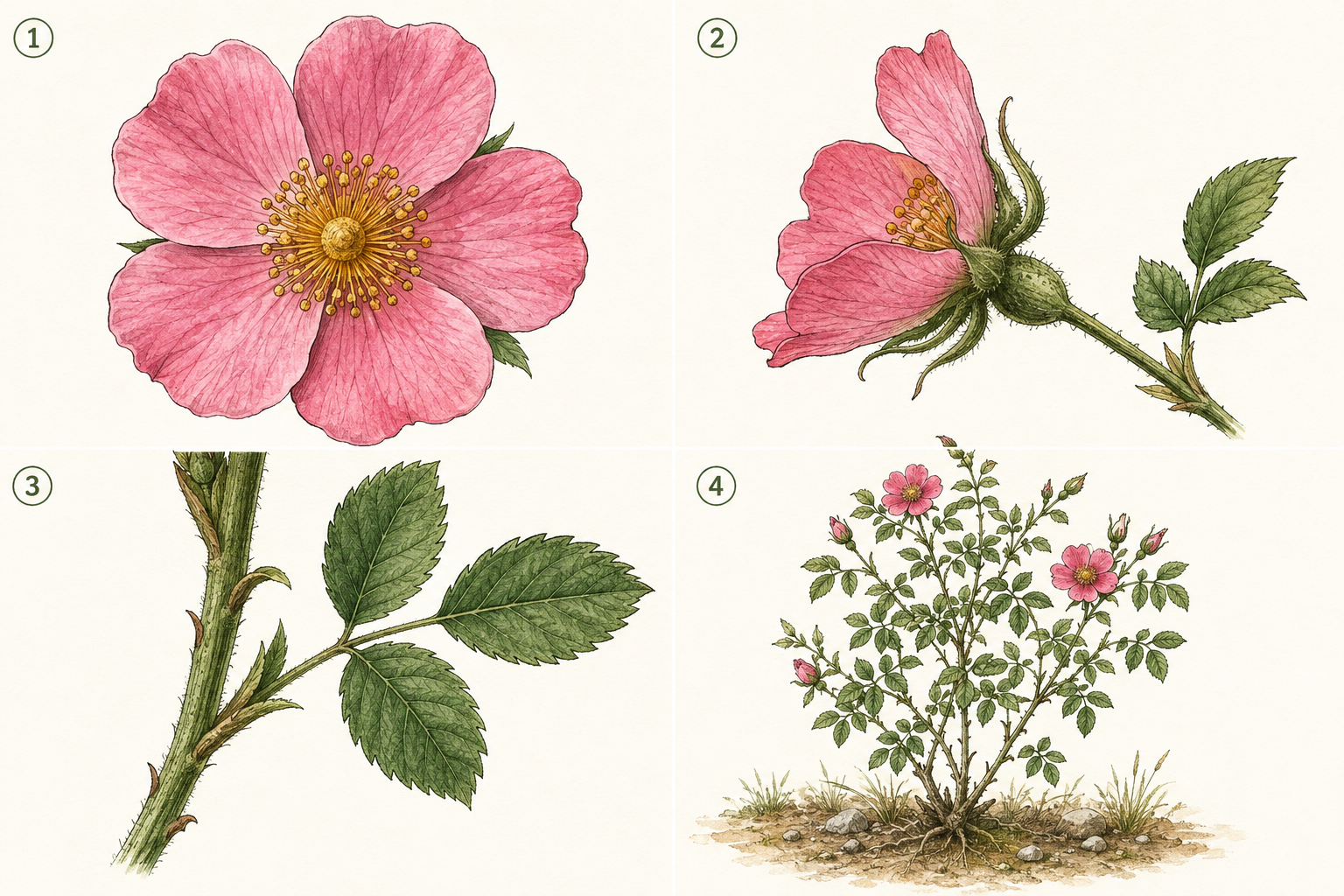
A front view gives the bloom shape. A side view shows its depth and the structures below it. A leaf-and-stem view can rule out a close candidate, while a whole-plant view supplies scale and growth habit.
Use even light when possible. Deep shadow, bright glare, heavy editing, and a distant flower can hide the structures needed for a careful identification.
How the result explains a match
Flower Identifier keeps visible observations separate from a possible name. An uncertain result can still be useful when it explains what the photo shows, what remains unclear, and which view would improve the answer.
| Evidence type | What the result explains | Why it matters |
|---|---|---|
| Observation | The image shows a yellow flower head with narrow outer rays and a raised centre. | Visible form narrows the group without pretending to know a hidden trait. |
| Leading candidate | One named flower best fits the visible structures and plant habit. | A candidate is an inference from the available evidence, not a certainty claim. |
| Conflicting or missing evidence | The leaf arrangement or underside of the bloom is not visible. | One hidden feature can prevent a reliable distinction from a close lookalike. |
| Next best view | Photograph the point where one leaf meets the stem. | A focused follow-up reduces uncertainty more efficiently than adding random images. |
Start with the evidence you remember
A photo is the quickest route when you have one. If you do not, begin with a remembered bloom form or write down the part that remains visible before the plant changes.
Explore flower guides for the next question
Use a guide when a photo is missing, the plant is growing outdoors, a name needs checking, or one visible structure needs a clearer comparison. Each guide answers one specific question.
A photo does not establish whether a plant is safe for a pet
Visual identification can begin a careful search, but pet-safety guidance requires the correct scientific name and a current record for that animal. A guessed name never proves that a plant is safe.
Once the plant has a well-supported identity, compare the cited records in the cat-safety directory or dog-safety directory.
Before you upload a flower photo
These answers explain what a photo can show, which views help most, and when professional safety advice is needed.
Can a photo identify a flower?
A clear photo can support a careful visual candidate or a smaller comparison set. The most useful result names what is visible, flags a conflict or missing feature, and asks for the next view when a species-level name is not supported.
Which flower photo helps most?
Start with a sharp front view of an open bloom. A bloom side view, one complete leaf where it joins the stem, and a whole-plant image add the evidence that most often separates close lookalikes.
Does a photo identification tell me whether a plant is safe for a pet?
No. A possible photo match cannot establish pet safety. First identify the plant by its scientific name, then check a current safety record for that animal. For a possible exposure, contact a veterinary professional or animal poison service promptly.
Is Flower Identifier free to use?
Yes. Flower Identifier is free to use in the browser and does not require an account or app installation.