Flowers That Look Like Hydrangeas: How to Tell Them Apart
A large rounded or flattened cluster can look hydrangea-like without belonging to Hydrangea. The resemblance comes from many small flowers gathered into one visible head, sometimes with showy outer flowers around a smaller centre. This page reviews hydrangea itself plus four limited lookalikes: guelder rose, elder, lilac, and Japanese spiraea. The strongest rule-out evidence is cluster architecture paired with a leaf and whole-shrub view. A close-up of one coloured head is rarely enough to establish the genus.
Key takeaways
- Guelder rose, elder, lilac, and Japanese spiraea can resemble hydrangea because their small flowers gather into conspicuous clusters.
- Hydrangeas usually have opposite, serrated leaves; compare these with guelder rose's lobed leaves and elder's compound leaves.
- Lilac's tubular individual flowers and typically heart-shaped leaves help separate it from a hydrangea cluster.
- Mophead, lacecap, and panicle hydrangeas have different cluster shapes, so a hydrangea need not have a round flower head.
- Photograph an individual flower and a full leaf as well as the entire cluster; the rounded silhouette alone is not diagnostic.
Which Features Make a Flower Look Hydrangea-Like?
Hydrangea-like describes an inflorescence, or flower display, rather than one flower. Hydrangeas usually present many small flowers in a terminal cluster. The display may be rounded like a mophead, flatter like a lacecap, or elongated in another hydrangea group. A flower that shares the outline can belong to a shrub with a different cluster type.
Separate the evidence into four groups:
- Cluster shape: rounded, flat, conical, or loosely branched.
- Individual flowers: tiny fertile flowers, showy sterile flowers, tubular florets, or separate five-petalled blooms.
- Leaves and nodes: opposite serrated leaves, opposite lobed leaves, pinnate leaves, or simple leaves on a different arrangement.
- Whole habit: a woody shrub, small tree, clump, or branch carrying several flower heads.
Kew describes Hydrangea as shrubs or small trees with usually opposite, serrated leaves and flower clusters at the ends of branches. The hydrangea profile explains why a photograph may identify the genus without identifying a cultivar. Blue or pink colour, cluster size, and the word “mophead” are not enough on their own.
Which Flowers Commonly Resemble Hydrangeas?
Each card explains why the plant resembles a hydrangea and which visible feature separates it. These five plants are useful starting points, not every plant that can produce a rounded flower cluster.
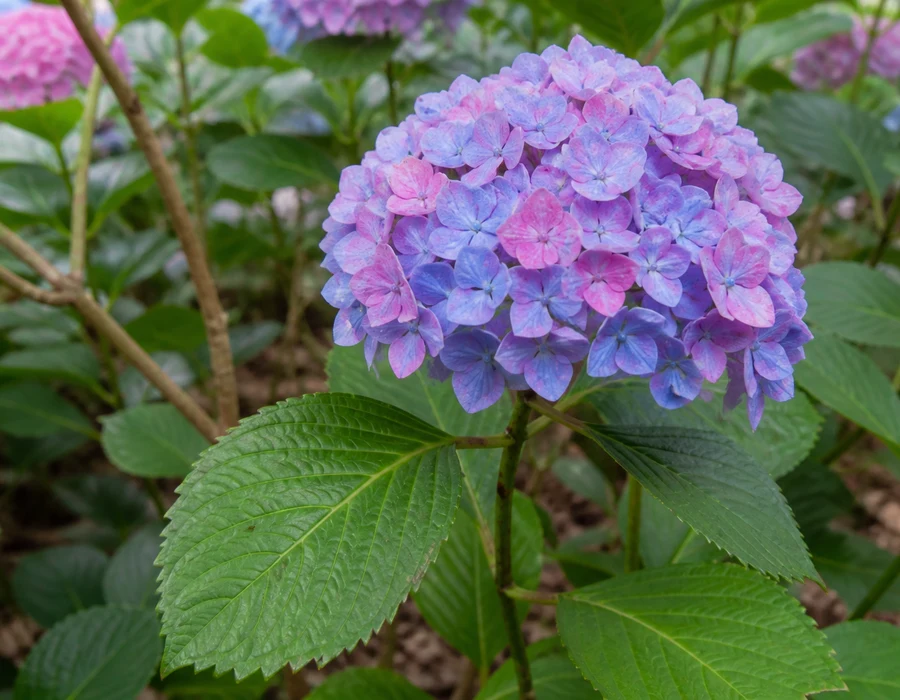
Hydrangea, Hydrangea
Why it resembles hydrangea: Many small flowers form clusters that can be rounded, flat, or elongated. Mophead describes a rounded cluster, while lacecap describes a flatter cluster with a visible centre and showier outer flowers.
What to verify: Look for opposite serrated leaves, a woody shrub habit, and the relationship between individual flowers and the full head.
Read more: Hydrangea identification and the Kew *Hydrangea* record.
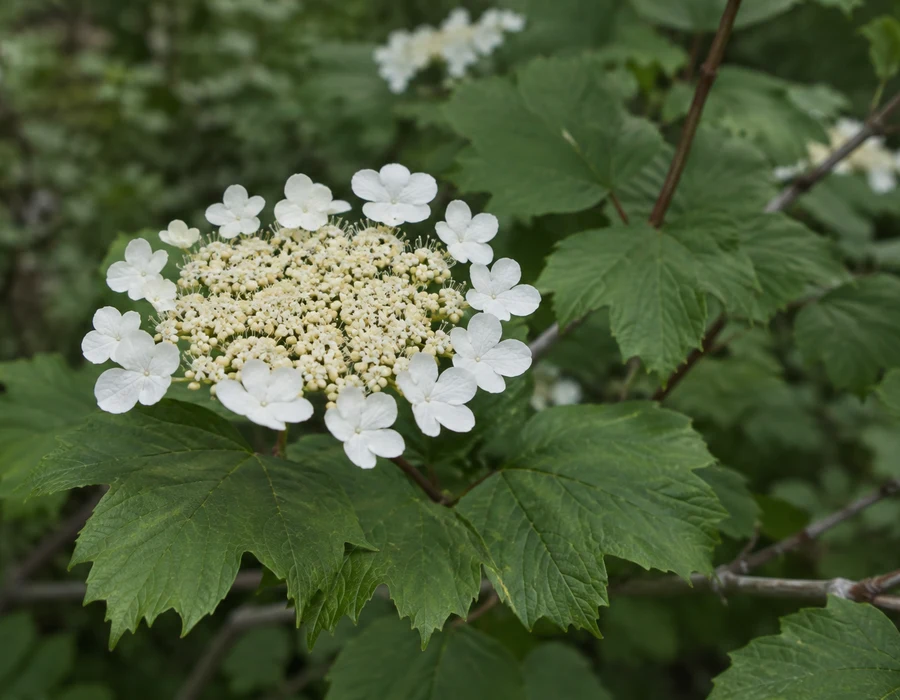
Guelder rose, Viburnum opulus
Why it resembles hydrangea: The species makes flat lacecap-like clusters with small fertile flowers and larger white sterile flowers. The sterile “Roseum” form makes dense rounded clusters.
What separates it: Its leaves are opposite and palmately lobed, like a maple leaf. The outer flowers and central fertile flowers are arranged within one viburnum cluster, not a hydrangea label.
Read more: RHS *Viburnum opulus* profile.
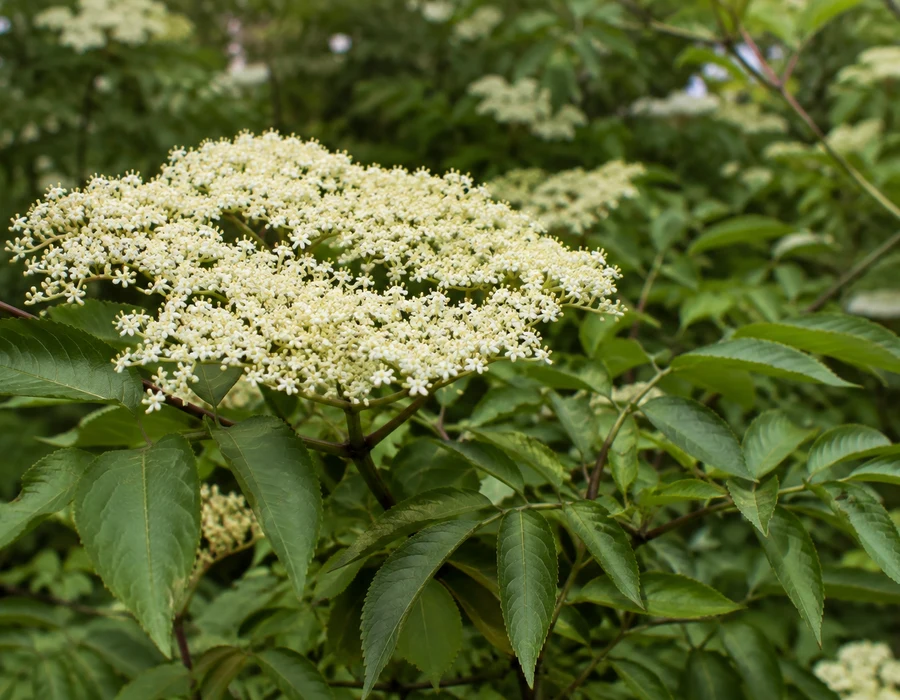
Common elder, Sambucus nigra
Why it resembles hydrangea: Early-summer flowerheads form broad, frothy sprays of many small cream flowers.
What separates it: Elder has pinnate leaves and a shrub or small-tree habit. The flower display is a flat spray, and later berries can remain on the same plant.
Read more: RHS *Sambucus nigra* profile.
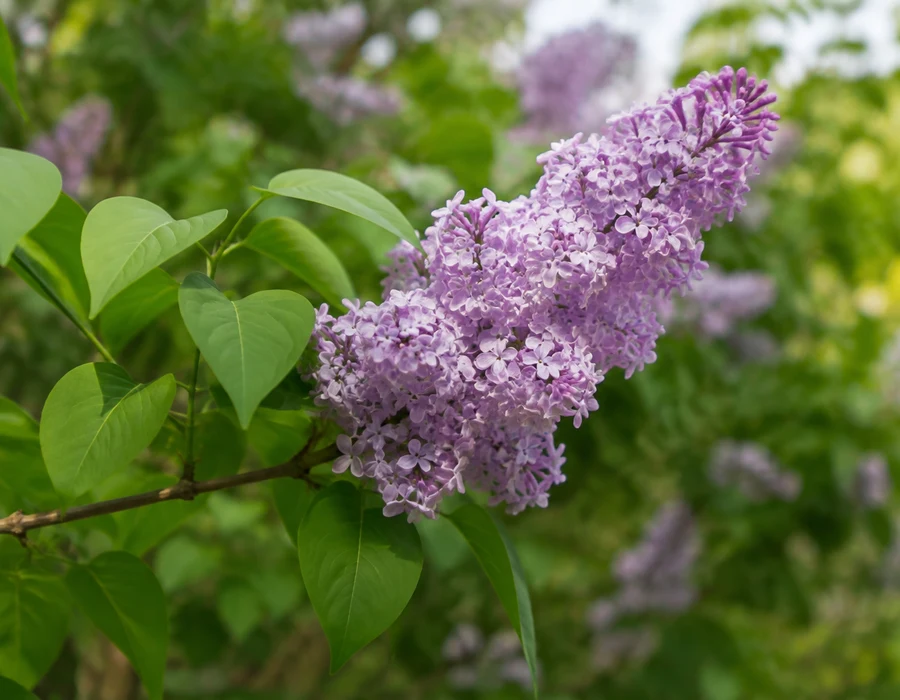
Common lilac, Syringa vulgaris
Why it resembles hydrangea: Fragrant flowers gather into conspicuous terminal clusters that can dominate the shrub from a distance.
What separates it: Lilac makes conical panicles of small, four-lobed tubular flowers and has simple heart-shaped leaves. A panicle is a branched cluster, not a rounded hydrangea head.
Read more: RHS *Syringa vulgaris* profile.
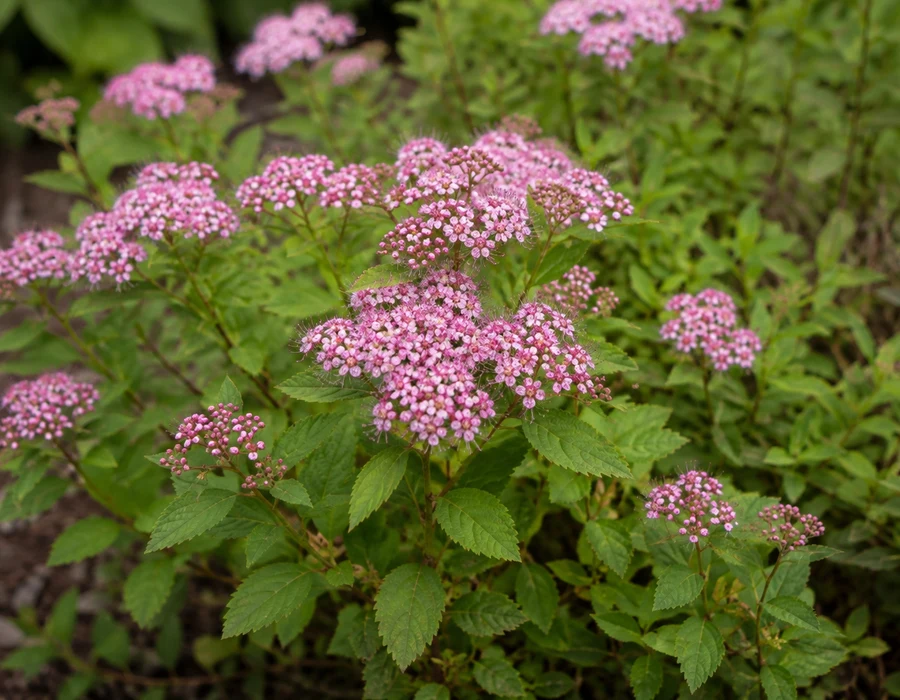
Japanese spiraea, Spiraea japonica
Why it resembles hydrangea: Large flattened heads of pink or white flowers can create a broad clustered patch on a shrub.
What separates it: The flowers are small and five-petalled, held in corymbs, panicles, or short racemes. Simple sharply toothed leaves and a smaller shrub habit point away from *Hydrangea*.
Read more: RHS *Spiraea japonica* profile.
These candidates show why the cluster alone is not enough. Compare an individual flower, a complete leaf, and the whole shrub before adding another lookalike.
How Can You Rule Out a Hydrangea?
Ask whether the head is one hydrangea-style inflorescence and what kind of leaves sit below it. The answer should concern a visible cluster, leaf, or habit trait, not colour.
Hydrangea rule-out key
Rounded or flat terminal cluster with opposite serrated leaves on a woody shrub: Hydrangea remains plausible.
Opposite maple-like lobed leaves with a lacecap cluster: test Viburnum opulus.
Pinnate leaves with broad frothy sprays on a shrub or small tree: test Sambucus nigra.
Simple heart-shaped leaves with a conical panicle of tubular flowers: test Syringa vulgaris.
Simple toothed leaves with a broad head of small five-petalled flowers: test Spiraea japonica.
Cluster, leaves, or whole habit hidden: the hydrangea-like class remains unresolved.
The key narrows the visual class but does not guarantee a species. A close crop can hide a panicle or make a small head look large. Use the individual flowers, leaf node, and whole shrub together, and do not transfer a hydrangea cultivar or colour claim to another genus.
What Photo Settles a Hydrangea Lookalike Question?
The best next view is a complete flower cluster paired with one leaf node and a whole-plant frame. Another crop of the coloured head usually repeats the original ambiguity.
Photo request for the hydrangea-like question
Best next view: Photograph the entire cluster from the front and side, then show two leaves attached to the same stem and the plant's base or main branches.
- Cluster side: shows a rounded head, lacecap, flat spray, or conical panicle.
- Individual flowers: reveals tubular, five-petalled, fertile, sterile, or ray-like structures.
- Leaf node: separates opposite serrated leaves from lobed, pinnate, or simple alternatives.
- Whole habit: supplies scale and shows a shrub, small tree, or branch carrying several heads.
Record the region, month, and whether the photograph shows a garden plant or a cut branch. Season can rank candidates but cannot override cluster and leaf evidence. Do not taste, crush, or brew an unknown plant to test fragrance or use.
Where Can You Verify the Leading Candidate?
If the cluster, opposite serrated leaves, and woody habit support the genus, open Hydrangea identification. If the structure points to viburnum, elder, lilac, or spiraea, use the linked source on its card and keep that scientific name attached to the result. Do not replace an external candidate with the hydrangea page just because the head is rounded.
Use bloom anatomy to label an inflorescence, individual flower, fertile flower, sterile flower, panicle, corymb, or receptacle. Use the flower bloom calendar only after the scientific name, region, and growing context are known. A cluster that opens or fades can change shape without changing its identity.
The Flower Identifier can organize a photo set around the hydrangea-like class. A useful result should explain why the head resembles hydrangea, name the leading independent candidate, identify the visible conflict with Hydrangea, and request the next separating view. It should not turn a rounded cluster, common name, or colour impression into a genus or cultivar claim.