
Flowers That Look Like Peonies: How to Tell Them Apart
A full or ruffled bloom can look peony-like without belonging to Paeonia. Overlapping petals, a hidden centre, and a broad bowl profile create the resemblance, but they are not a botanical test. This page reviews five limited candidates: rose, camellia, Persian buttercup, gardenia, and dahlia. The most useful rule-out question is usually about the centre and the plant below it: is this one flower on a clump or cane, or a composite head on a different stem? A whole-plant photo is the best fallback when a bloom is cropped.
Key takeaways
- Double roses, camellias, Persian buttercups, gardenias, and dahlias can resemble the full, layered flowers of peonies.
- Peonies have divided leaves; glossy, simple leaves instead point toward alternatives such as camellia or gardenia.
- Prickled woody stems with serrated leaflets support rose, but a woody stem alone does not exclude tree peony.
- A dahlia display is a composite head of many florets, not one peony flower with many petals.
- Use the supporting foliage and whole-plant habit to distinguish these lookalikes when dense petals hide the flower centre.
Which Features Make a Flower Look Peony-Like?
Peony-like describes visible form. A flower enters this visual class when its petals are densely layered, its centre is recessed or hidden, and its side profile forms a bowl, cup, or rounded rosette. Those features explain why a photograph recalls a peony, but they do not prove Paeonia.
Read five evidence groups separately:
- Bloom construction: single, semi-double, double, anemone-form, ruffled, or densely overlapping petals.
- Centre: visible stamens or disc, a button-like centre, or no centre visible because extra petals fill it.
- Side profile: shallow cup, deep bowl, rounded rosette, or a head carried upright on a long stalk.
- Leaf structure: broad divided leaves, serrated rose leaflets, simple glossy leaves, or pinnate and bipinnate leaves.
- Plant habit: a perennial clump, woody shrub or cane, tuberous herb, or composite-flower stem.
The last two groups often separate a peony from its lookalikes. Kew and the RHS peony profile describe Paeonia as herbaceous perennials or deciduous sub-shrubs with large divided leaves and showy bowl-shaped flowers. A front-facing, double flower can hide those traits, so do not treat petal fullness, pink color, fragrance, or a florist label as a species key.
Which Flowers Commonly Look Like Peonies?
Each card has a documented peony-like feature and a visible separator. A candidate remains provisional until its leaves, stem, and scientific name agree.
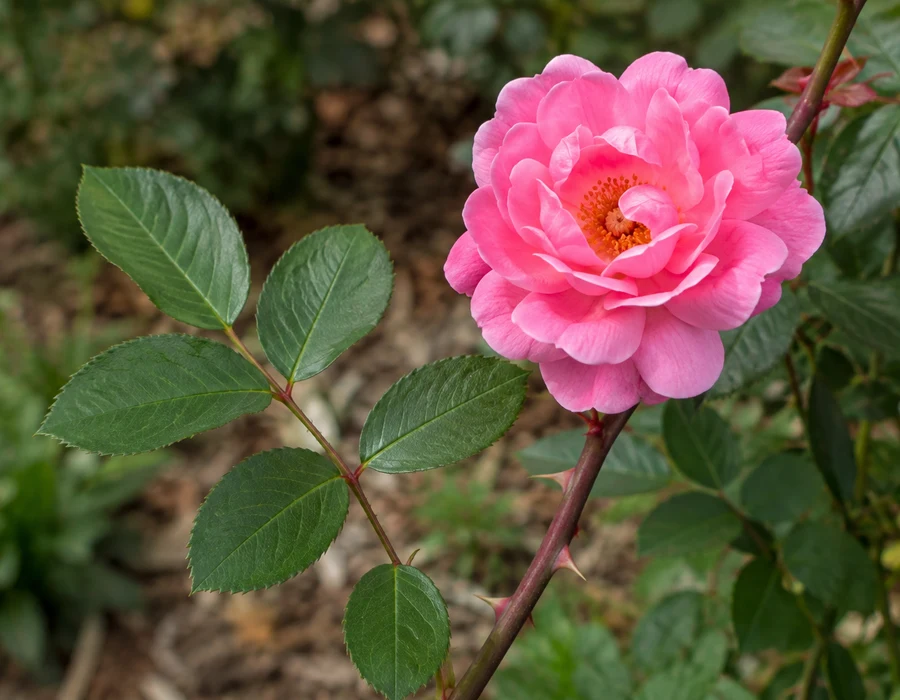
Rose, Rosa
Why it looks peony-like: Rose flowers include rounded, cupped, pompon, and rosette forms. Double roses can fill the centre with overlapping petals.
What separates it: Roses are usually woody plants with prickles and compound leaves made of serrated leaflets.
Read more: Rose identification and the Kew *Rosa* record.
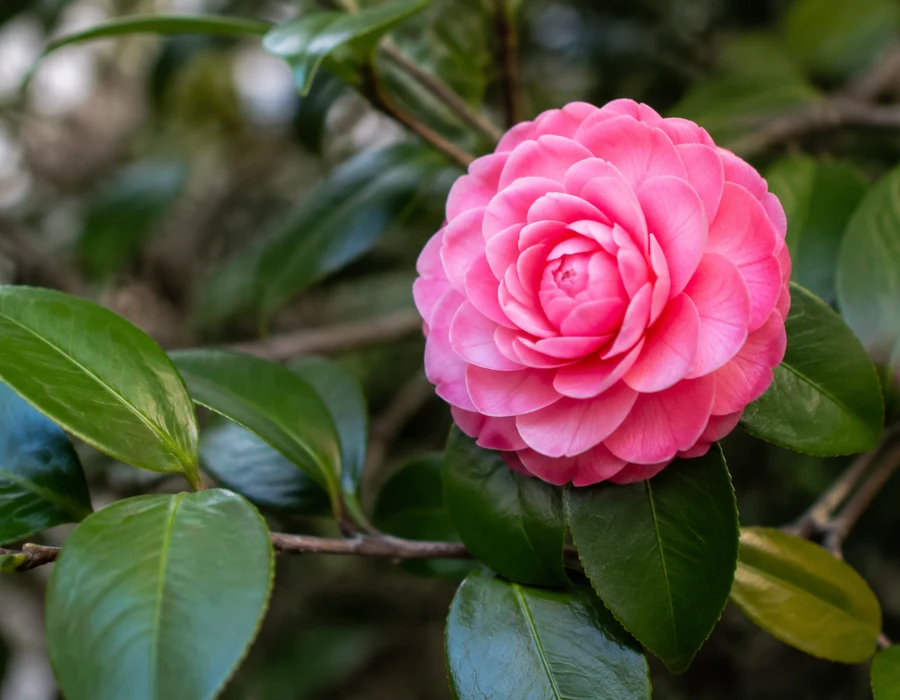
Japanese camellia, Camellia japonica
Why it looks peony-like: Formal flowers can have many overlapping petals and a rounded face. RHS lists “rose camellia.”
What separates it: It is an evergreen shrub with simple, glossy, leathery leaves, not peony's divided foliage on a soft-stemmed clump.
Read more: RHS *Camellia japonica* profile and the Kew scientific-name record.
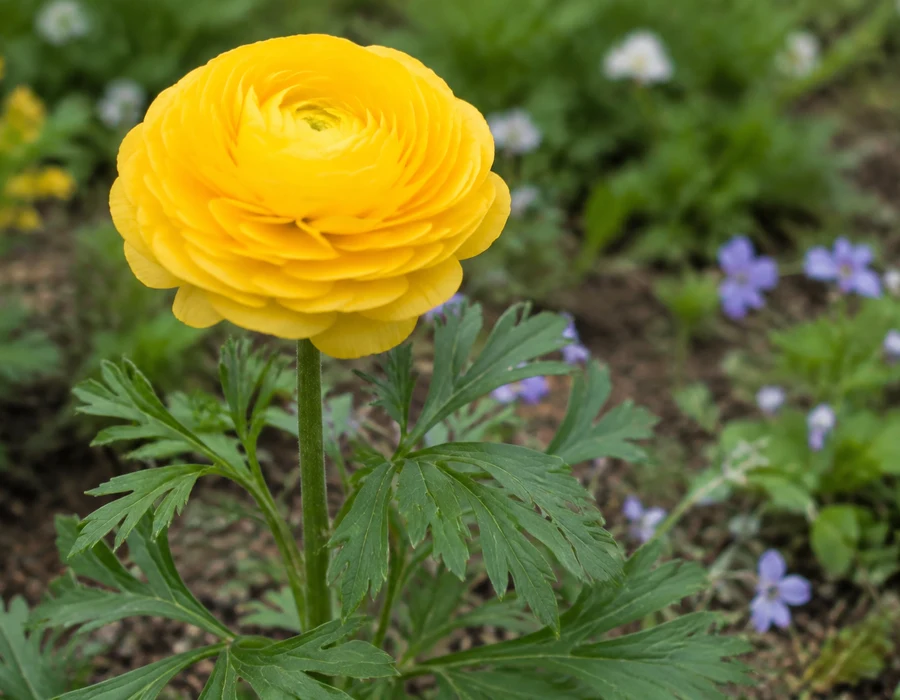
Persian buttercup, Ranunculus asiaticus
Why it looks peony-like: Many close-set petals and a rounded cup can recall a small peony bloom.
What separates it: It is a tuberous perennial with long-stalked, deeply lobed leaves and branching stems, not peony's broad divided leaves on a clump.
Read more: RHS *Ranunculus asiaticus* profile and the Kew species record.
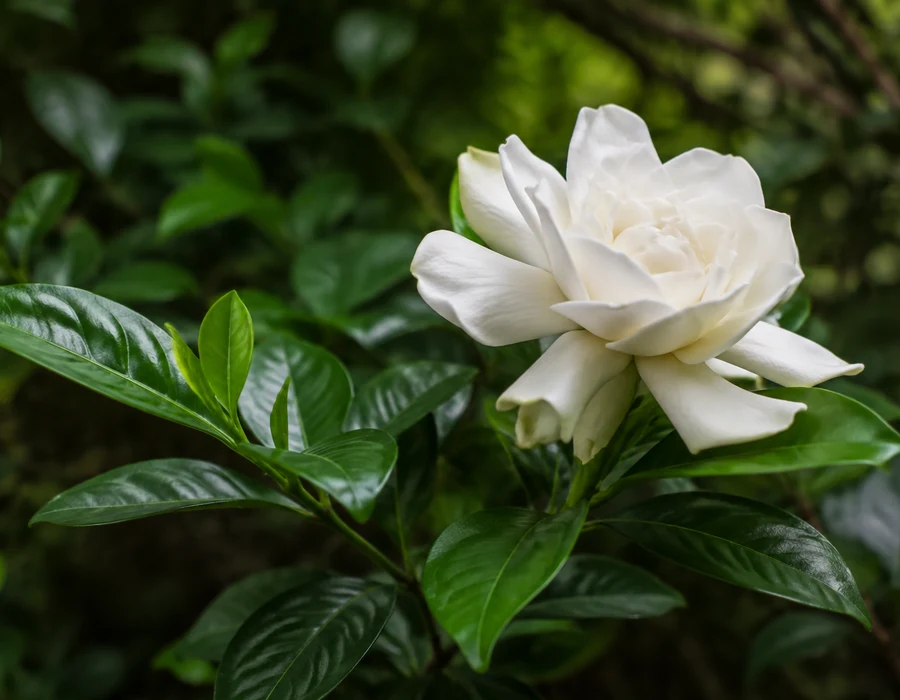
Gardenia, Gardenia jasminoides
Why it looks peony-like: Large white flowers with overlapping lobes can make a rounded, layered face.
What separates it: It is an evergreen shrub with glossy elliptic leaves and a broadly funnel-shaped flower. Simple leaves and the tubular base point away from *Paeonia*.
Read more: RHS *Gardenia jasminoides* profile and the Kew species record.
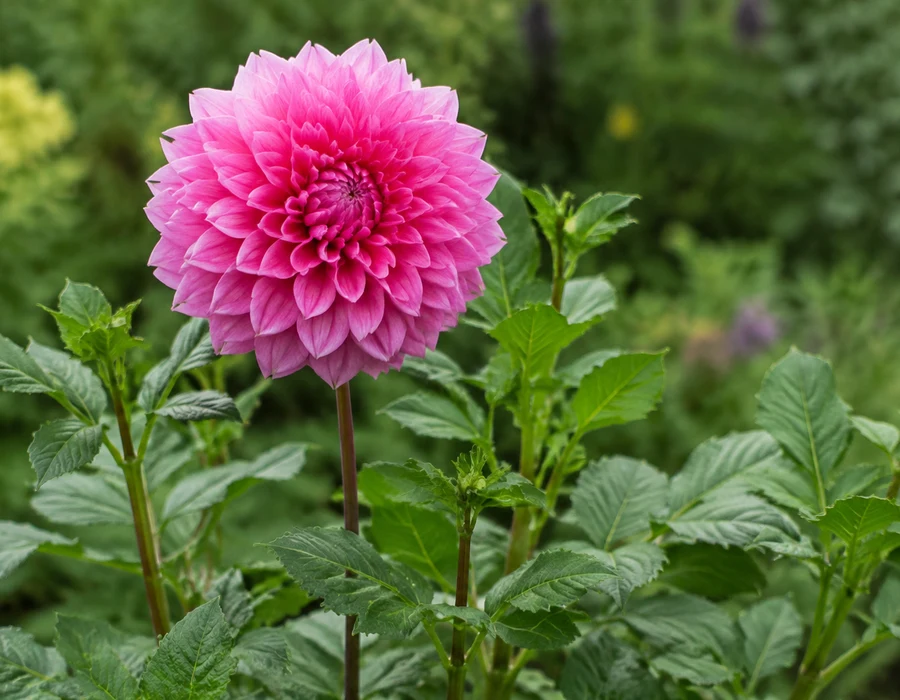
Dahlia, Dahlia
Why it looks peony-like: Some dahlias form multi-petalled spheres or jagged ruffles, giving a full bloom a peony-like silhouette.
What separates it: A dahlia head is a composite capitulum with commonly pinnate or bipinnate foliage. It grows from tubers and has a different centre from *Paeonia*.
Read more: RHS dahlia guide and the Kew *Dahlia* genus record.
These five plants are common starting points, not every flower that can look like a peony. If none fits, use the flower-features finder and compare the stem, leaves, flower centre, and whole-plant habit before considering another name.
How Can You Rule Out a Peony?
Ask what is in the centre and where the leaves sit. A peony is one flower on a perennial or shrubby plant. A dahlia is a composite head, and the other candidates have distinct stem and leaf patterns.
Peony rule-out key
Broad divided leaves rising from a clump, with a bowl-shaped bloom: Paeonia remains plausible.
Woody stem with prickles and serrated compound leaflets: test Rosa.
Simple glossy leaves on an evergreen shrub: test camellia or gardenia.
Tuber-grown plant with lobed or pinnate leaves, or a composite head: test ranunculus or dahlia.
Centre, leaves, and stem hidden: the peony-like class remains unresolved.
This key narrows a visual class; it does not guarantee a species. Tree peonies can have woody stems, double flowers can hide the centre, and dahlia forms vary widely. Use several visible traits before moving from resemblance to identity, and do not use petal color as the deciding question.
What View Helps Separate a Peony from Its Lookalikes?
The best next view is a side profile followed by a whole-plant frame that includes the stem, leaf attachment, and plant base. Another close-up of a full bloom often repeats the feature that caused the confusion.
Photo request for the peony-like question
Best next view: Photograph the bloom from the side, then show two leaves attached to the same stem and the plant base. Keep enough background to reveal a clump, shrub, tuber-grown herb, or upright stem.
- Side profile: shows a bowl, cup, rosette, or composite head and how it attaches.
- Centre: records stamens, a disc, a button, or a hidden centre without dissecting the flower.
- Leaf and node: separates peony's divided foliage from simple, serrated, lobed, or pinnate leaves.
- Whole habit: supplies scale and reveals whether flowers rise from a clump, cane, or branching stem.
Record the country or region, month, and whether the image shows a garden plant or cut flower. Season can rank candidates but cannot override contradictory structure. Do not taste, crush, or brew an unknown flower to test fragrance or use.
Where Can You Compare the Leading Candidate?
If broad divided leaves and a clumping habit support Paeonia, open Peony identification. If the plant has a woody cane, prickles, and serrated leaflets, open Rose identification. The direct Peony vs. Rose comparison handles those two named scopes, while this page remains a visual resemblance class.
When the bloom still looks peony-like but the foliage or centre points elsewhere, return to the relevant candidate card and its linked source. Use bloom anatomy to label petals, sepals, receptacle, disc florets, and ray florets. Use the flower bloom calendar only after the scientific name and location are known.
The Flower Identifier can organize a photo set around the peony-like class. A useful result should state why the bloom resembles a peony, name the leading independent candidate, identify the visible conflict with Paeonia, and request the next separating view. It should not turn a common name, florist label, or generic double-flower photo into a peony identification.