
Dandelion Identification: How to Recognize a Dandelion
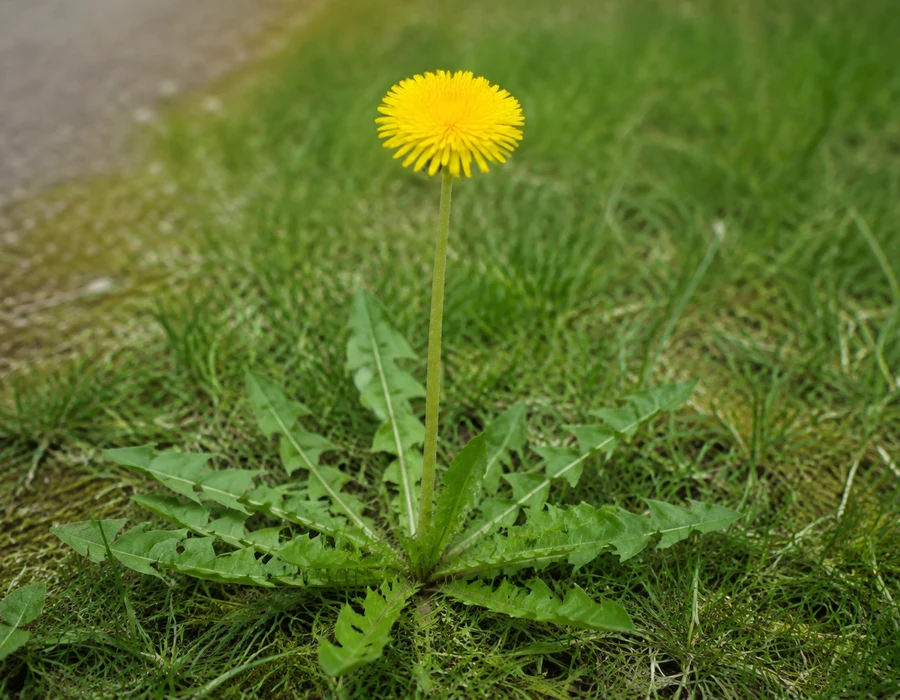
The familiar common dandelion belongs to a group that botanists classify differently in different regions. It is often labelled Taraxacum officinale, while Kew places it in Taraxacum section Taraxacum. A photograph can usually identify the common dandelion group but not one of its many nearly identical microspecies. Look for one bright yellow flower head on a hollow, leafless stalk above a rosette of deeply toothed leaves. A round white seed head provides another useful clue.
Key takeaways
- Dandelions (Taraxacum) have deeply toothed leaves in a basal rosette and one yellow head on each hollow, leafless, unbranched flowering stalk.
- The yellow head contains strap-shaped florets throughout, unlike a sunflower's contrasting central disc.
- Catsear can have hairy leaves and forked, solid flowering stems carrying several heads, which helps distinguish it from dandelion.
- The rounded seed head carries wind-dispersed fruits with parachute-like tufts; photograph it alongside the leaves when available.
- The common dandelion group contains difficult regional plants, so a recognisable dandelion does not automatically yield a precise microspecies name.
How Do You Identify a Dandelion?
The strongest dandelion pattern is a single yellow composite flower head on an unbranched, hollow, leafless scape that rises from a low rosette of deeply toothed leaves. The head is made of many small yellow ray florets, so it is a flower head rather than one simple five-petaled flower. After flowering, the same scape can carry a round white seed head made of parachute-like structures.
Kew's dandelion profile describes the familiar plant as a perennial with deep green, jagged leaves in a rosette, bright yellow heads on hollow stalks, and downy fruiting heads. The University of Minnesota Extension guide provides the practical field characters used in the table below.
| Trait | Dandelion-group evidence | Why it helps |
|---|---|---|
| Flower display | One yellow head made of many ray florets | A composite head separates the plant from a simple yellow flower. |
| Scape | Usually unbranched, hollow, leafless, and carrying one head | A side view of the scape is often more useful than another front view of the bloom. |
| Leaves | Deeply lobed or toothed, hairless leaves in a basal rosette | The leaf outline and surface help test a dandelion impression when no flower is open. |
| Seed stage | A round white head with many parachute-bearing fruits | A mature seed head can connect a later plant stage to the earlier yellow bloom. |
| Sap | White or milky sap is reported in the leaves and scape | Sap is supporting evidence only and should not be treated as a safety test. |
| Identification level | Common dandelion group, not a guaranteed microspecies | Botanical classification of dandelions varies by region. |
The word dandelion does not always point to one single species. Kew's Plants of the World Online record recognises Taraxacum section Taraxacum and notes that the group contains many difficult-to-separate microspecies. For image identification, it is more useful to report the visible group and explain what additional details are needed for a narrower regional name.
Which Traits Separate a Dandelion from Similar Yellow Flowers?
Check the plant in an order that preserves the most information: whole habit, scape, leaves, then head and seed stage. A front-facing yellow bloom can look convincing even when the rest of the plant belongs to another composite group.
- Inspect the scape. A typical dandelion scape is smooth, hollow, leafless, and unbranched. It generally supports one head. If the flowering stem forks or carries several heads, keep the identification open.
- Find the leaves. Dandelion leaves form a basal rosette rather than a leafy stem. Their lobes or teeth commonly angle back toward the base of the leaf. The leaves are generally hairless, although a damaged or very young leaf can be hard to judge from a photograph.
- Read the head as a composite. The yellow display is built from many narrow ray florets. Photograph the head from the front and side so the green bracts beneath it are visible.
- Compare the seed stage. A spherical white head of individual parachute-bearing fruits is a useful stage link. A white, fuzzy-looking flower without the earlier yellow head should not be named from color alone.
- Use sap carefully. A milky exudate can occur in dandelions, but touching or breaking a plant is unnecessary for a photo identification and is not a reliable test for safe handling.
One important comparison is catsear, also called false dandelion. A Penn State Extension comparison describes catsear as having forked, solid flowering stems with multiple heads, while dandelions have unforked hollow stems with a single head. The same source contrasts hairy catsear leaves with the usually hairless dandelion leaf. Treat those characters as a comparison aid, not as permission to identify every yellow rosette from one trait.
Which Yellow Blooms and Dandelion-Like Flowers Need a Closer Look?
Many members of the daisy family can produce a yellow composite head, and several form a low rosette. A yellow color match is therefore a starting clue, not a final name. Open the yellow blooms directory when the color and head shape are your main evidence. It organizes the next comparison without turning a shared color into a species claim.
Ask for a closer look when any of these signals appears:
- The stem is branched, solid, or visibly leafy.
- More than one head occurs on the same flowering stem.
- Leaves are hairy, narrow, or arranged along the stem instead of in a basal rosette.
- The head is small, elongated, or made of a different mix of ray and disk florets.
- The photo shows only a yellow blur, a closed bud, or a white seed head without the plant base.
Chicory, sowthistles, hawkbit, catsear, and other regional composites can enter a visual comparison, but the appropriate alternatives depend on location and the plant stage. A resemblance is useful when it tells you which structure to photograph next. It is not evidence that two plants share a scientific name, toxicity profile, or human use.
Why Do the Dandelion Name and Location Matter?
Once the plant fits the common dandelion group, use references written for the same region. Local plant guides may divide familiar dandelions into several nearly identical species. Flowering times, distribution, and safety information should match the scientific name used by the source.
When and Where Does This Dandelion Group Bloom?
The common dandelion group is a perennial that can flower for much of the year in suitable conditions, rather than following one universal calendar. Kew describes the familiar plant as occurring in grasslands, woodlands, and other rich soils in cool climates. Its Kew Gardens profile lists flowers most visibly from April through June and again from September through November in that London garden, with foliage present across a longer span.
Those dates are a local observation, not a worldwide rule. Temperature, daylight, moisture, mowing, elevation, and the local name used for the dandelion group can all change when a plant is visible. Use the flower bloom calendar after confirming the location and scientific name. Season can support an identification, but it cannot override a contradictory scape, leaf, or head structure.
Is This Dandelion Group Toxic to Cats, Dogs, or People?
There is no single pet-safety answer for an uncertain photograph labelled only “dandelion.” The current ASPCA Toxic and Non-Toxic Plants List says its database covers frequently encountered plants rather than every plant, and it advises checking the plant name and contacting a veterinarian or animal poison service after a possible exposure. This page does not assign a cat or dog label without a current record that matches the scientific name.
For people, the North Carolina Extension profile lists low-severity poison characteristics and notes that sap can irritate skin. That information is not an edible-plant recommendation, an identification shortcut, or a substitute for local medical guidance. Do not consume an unknown plant from a photo, and do not use a common name to infer that a specimen is safe.
| Safety question | Evidence-based boundary |
|---|---|
| Can a photo prove that a dandelion is safe for a pet? | No. Identify the plant and check a current record for the affected animal. |
| Does a traditional or household use prove safe human consumption? | No. Identity, preparation, contamination, allergies, and individual health all matter. |
| What should happen after a possible ingestion? | Contact a veterinary professional, animal poison service, or appropriate medical service promptly. |
Can a Photo Verify This Dandelion?
A photo can support a dandelion-group identification when it shows the structures that carry the diagnosis. Send a full-plant view, a side view of the flowering scape, a front and side view of the head, a close view of the leaf margin and surface, and the plant base. If available, add a seed-head view from the same patch and note the country or region.
Use the Flower Identifier to ask whether the plant fits the common dandelion complex. A careful result should name the visible characters, separate a likely dandelion from a similar yellow composite, and state when the photo cannot support a narrower species. It should not convert a yellow color match into a global microspecies, a native-status statement, or a pet-safety verdict.